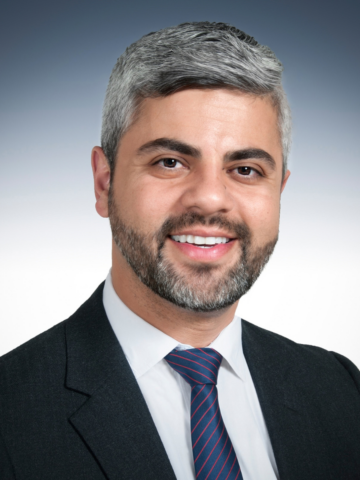
A new study co-led by Drs. Charles Golden and Michael Weiss of Rady Children’s Hospital Orange County found that a child’s mental health isn’t shaped only by major trauma such as abuse or neglect, but also by an unpredictable home life with inconsistent routines, frequent changes, or uncertainty about what comes next.
Published in Nature Mental Health, the study is one of the largest investigations of childhood adversity conducted in a real-world setting. A collaboration with Dr. Tallie Baram of the University of California, Irvine, and Dr. Laura Glynn of Chapman University, the study involved nearly 30,000 children receiving care through 19 pediatric practices affiliated with Rady Children’s Hospital Orange County between 2021 and 2024.
The study found that an unpredictable home life increases a child’s risk for depression, anxiety, and physical symptoms such as headaches and stomachaches.
“These findings can be immediately translated to action for frontline pediatricians,” said Dr. Weiss, vice president of population health and the Clavis Foundation Chair for Wellness. “While we have always, empirically, known that unpredictability has an adverse effect on children, this study validates that assumption and provides us with an opportunity to offer proactive education and guidance to families before the adverse events occur, and helps us create guidance to make changes where opportunities exist.”
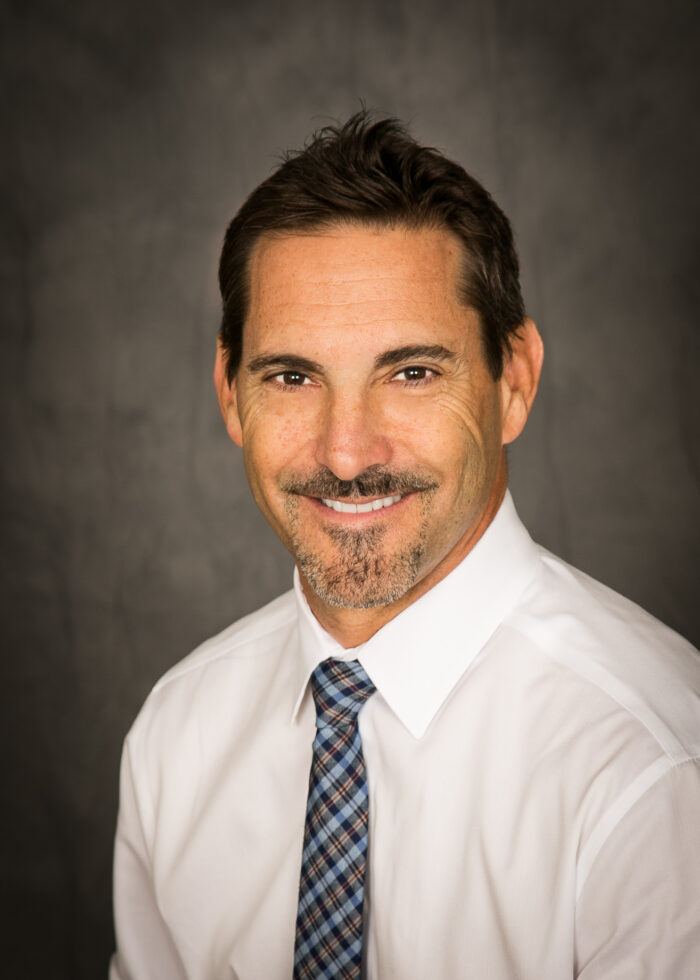
Dr. Golden, vice president and assistant chief medical officer, said the study findings have the potential to positively alter how pediatric anticipatory guidance is provided across the country. The next phase is to test various interventions and determine which, alone or in combination, have the greatest positive effect, he said.
Two measuring tools
Researchers measured unpredictability using a brief, five-question questionnaire conducted alongside State of California-endorsed Adverse Childhood Experiences (ACEs) screenings.
When they combined both measures, researchers often found stronger links to mental health outcomes than with either screening tool alone. Importantly, unlike many other types of adversity that are difficult to eradicate, parents and families can learn to improve consistency and predictability of children’s routines.
“For years, pediatricians have focused on screening for adverse childhood experiences such as abuse and neglect,” said Dr. Glynn, professor of psychology. “Our findings show that unpredictability is a distinct and meaningful form of adversity that contributes to children’s mental health in ways that existing screening tools often miss.”
The study built on years of neuroscience research led by Dr. Baram, distinguished professor in the UCI School of Medicine’s departments of pediatrics, anatomy and neurobiology and neurology, whose work helped establish that predictability plays an important role in healthy brain development.

“What we discovered in the laboratory is that optimal development of the brain depends on consistent patterns, which enable the maturation of brain connections.” Baram said. “Like mice, children’s brain connections involved in happiness, threat and safety benefit from repeated, predictable experiences. This study shows that those principles matter not only in neuroscience research, but also in the lives of children and families from a broad range of wealth and backgrounds.”
For Baram and her colleagues, the project provided an opportunity to test in real-world settings in children a concept that emerged from years of neuroscience research: that predictable experiences help shape healthy brain development, while unpredictability can leave children more vulnerable to later mental health challenges.

Five-year collaboration
The study grew out of a collaboration launched in 2021, when researchers from UCI, the hospital then known as CHOC, and Chapman University received a $2.9-million grant from the California Initiative to Advance Precision Medicine to investigate how to address with better precision the effects of many childhood stresses on child neurodevelopment.
The collaboration brought together neuroscientists, psychologists, pediatricians and data scientists across the three institutions and leveraged California’s statewide effort to screen children for adverse childhood experiences. California became the first state in the nation to implement a publicly supported ACEs screening program.

Key findings
Among the study’s most notable findings, children who reported high levels of unpredictability despite having no traditional ACEs were substantially more likely to have depression than children who scored low on both measures. The unpredictability screening tool also showed value in identifying children at risk for sleep disorders.
For researchers and clinicians, the findings may be especially significant because unpredictability is often something families, communities and policymakers can address.
Unlike some forms of childhood adversity, unpredictability should be amenable to intervention by educating families to adopt consistent family routines and consistent reliable caregiving. Previous research by members of the team has found that predictable home environments can help buffer children from the effects of stress and adversity, specifically during the COVID-19 pandemic.
“For parents, this isn’t about creating a perfect home,” Baram said. “It’s about recognizing that consistency matters. Small routines and predictable patterns in daily life can support healthy development.”
Researchers note that the unpredictability questionnaire has now been included in the two largest national studies on childhood adversity. They hope the findings will prompt pediatricians and policy makers to incorporate unpredictability in childhood care, opening new conversations about how families, schools and communities can promote resilience during childhood.

Learn more about CHOC’s Pediatric Mental Health Services
CHOC Hospital was named one of the nation’s best children’s hospitals by U.S. News & World Report in its 2024-25 Best Children’s Hospitals rankings and ranked in the behavioral health specialty.